











The phrase gets thrown at options traders constantly, usually by someone who doesn’t trade them. “Options trading is a zero sum game. For every winner there’s a loser. You’re just gambling with someone else’s money.” And here’s the uncomfortable part: they’re not entirely wrong. A single options contract is zero-sum by definition. If a call buyer makes $500, the call seller loses exactly $500. You cannot argue with the arithmetic.
However, you can debate their conclusion. They say the contract’s zero-sum nature means there’s no edge, no skill, and no reason to choose one side over the other. That leap from “the contract is zero-sum” to “the strategy is futile” is where the argument falls apart. And it falls apart in three distinct ways, each more interesting than the last.
It’s Actually Worse Than Zero Sum – And That’s Fine
Here is the first thing most people get wrong about this debate: they assume the honest answer is “options aren’t really zero-sum.” The honest answer is more uncomfortable than that. 
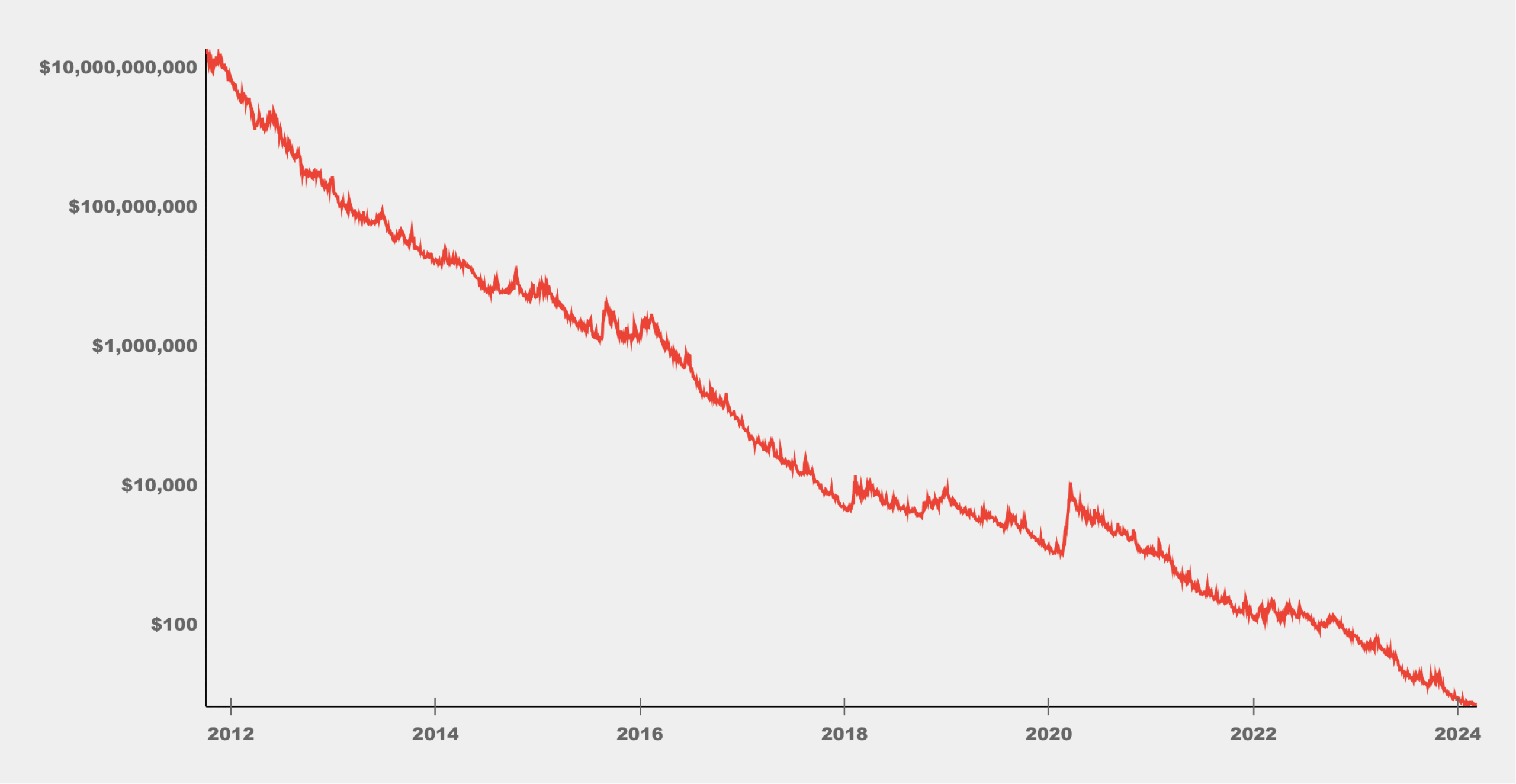
After transaction costs – the bid-ask spread, commissions, exchange fees – pure options trading is a negative sum in the aggregate. Money exits the system on every trade. The total P&L of all participants combined is slightly negative every single day. That is mathematically unavoidable.
And yet the options market processes trillions of dollars in notional value every year, with participation from pension funds, insurance companies, market makers, hedge funds, and individual traders. Nobody participates in a negative-sum game by accident. They participate because the contract’s P&L is not the whole story.
Why the Options Market Is Not a Zero Sum Game
The zero-sum framework assumes every participant has the same goal: to make money on the trade. They don’t. And that is the first place the framework breaks down. Dr. Jim Schultz explained this clearly in a January 2025 episode of Tastylive’s The Skinny on Options: Abstract Applications. He said, “It’s a zero-sum contract, but a positive-sum market.“
Consider a pension fund managing $10 billion in equities. Before a period of uncertainty, they buy protective puts on the S&P 500. The market rallies, the puts expire worthless, and whoever sold those puts keeps the premium. In the zero-sum ledger, the fund lost the premium paid. In reality, their $10 billion portfolio grew by 10%. The option was not a bet; it was insurance. The cost of staying invested during a period of uncertainty. The fund was not trying to beat the put seller. They were trying to transfer crash risk off their books and keep their board of directors from panicking at the wrong moment.
Both parties got exactly what they wanted. The seller got the cash. The buyer got the protection. That is economic utility, and it is why the options market exists at all.
Market makers complete the picture. They are not taking directional views. They buy at the bid, sell at the ask, collect the spread, and provide the liquidity that makes instantaneous execution possible for everyone else. Their compensation is explicit and visible in every options chain. It is a service fee, not a transfer from a loser to a winner.
This is what distinguishes the options market from a poker table. In poker, every chip on one side of the table came from the other side. In options, the biggest players are hedgers. They pay premiums they see as cheap for the protection they get. Market makers also play a role by charging for their services. The other party in your trade might not care if the option ends in or out of the money. They may have already hedged all directional risk as soon as the trade was made.
The VRP: Where the Seller’s Edge Actually Lives
The insurance analogy explains why the market exists. What it doesn’t fully explain is why selling premium specifically has positive expected value over time. For that, you need to understand the Volatility Risk Premium.
Implied volatility is what the market expects an underlying to move over the life of an option; the price of fear, priced into every contract. Realized volatility is how much the underlying actually moves over that same period. Across decades of data and multiple asset classes, implied volatility persistently and systematically exceeds realized volatility. The gap between them is the Volatility Risk Premium (VRP), and it is the structural foundation of every short premium strategy.
| Term | What It Represents |
|---|---|
| Implied Volatility (IV) | The price of fear; what the market expects |
| Realized Volatility (RV) | The price of reality; what actually occurred |
| VRP | The systematic spread; what disciplined sellers harvest |
Think of VRP as Gamma Rent. Option buyers pay a daily premium (theta) to sellers for the right to capture a large move. Because human beings are naturally risk-averse, and because institutions need to remove crash insurance from their balance sheets, they are willing to pay a rent that is persistently higher than the statistical value of the moves they actually receive. The seller’s edge is not time decay by itself. It is being paid to warehouse the convexity and crash insurance that other participants want off their books. Time decay is the mechanism.
Studies tracking the IV-RV relationship across large-cap S&P 500 stocks have found that implied volatility overstates realized volatility approximately 85% of the time, with the gap averaging 3 to 5 percentage points under normal market conditions and expanding significantly during periods of elevated fear, precisely when premium is most abundant and most overpriced.
The Academic Evidence
This is not trader folklore. The Volatility Risk Premium has been thoroughly documented in peer-reviewed finance research that spans decades.
Carr and Wu (2009) – Variance Risk Premiums, published in The Review of Financial Studies – synthesized variance swap rates from options data and compared them to subsequent realized variance across five major stock indices and 35 individual stocks. Their central finding: variance risk premia were strongly and persistently negative for the S&P 500 and S&P 100 indices. In plain English, options were systematically overpriced relative to what actually happened. Not occasionally, but consistently, across different market regimes, across years of data.
Bollerslev, Tauchen, and Zhou (2009) – Expected Stock Returns and Variance Risk Premia, published in The Review of Financial Studies – found that this IV-RV gap explained as much as 15% of quarterly variation in S&P 500 excess returns. The variance risk premium is not statistical noise. It is a priced, systematic feature of the market with genuine predictive power – the kind of result that gets finance professors excited and should get options traders paying attention.
Fallon, Park, and Yu (2015) – Asset Allocation Implications of the Global Volatility Premium, published in the Financial Analysts Journal – examined 34 volatility return series across global equity, fixed income, currency, and commodity markets over 20 years. Shorting volatility consistently produced Sharpe ratios of 0.5 to 1.5 across asset classes, compared to a 0.4 Sharpe ratio for simple equity market exposure. The VRP is not an S&P 500 anomaly; fixed income shows it, currencies show it, and commodities show it. The premium is pervasive.
Why does this gap persist if markets are reasonably efficient? Because it is genuine compensation for genuine risk. Rare, large losses from short volatility strategies occur disproportionately during market crises, exactly when investors are most vulnerable and losses are most painful. Selling volatility is structurally similar to running an insurance company: steady premium collection punctuated by occasional large payouts. The premium must exceed expected claims to attract sellers willing to hold through the bad periods. That excess is the VRP.
What the tastylive Data Actually Show
In October and November 2018, tastylive researchers Mike Butler and Nick Battista conducted a three-part series. They wanted to see if active management could change the zero-sum game in options trading. They used real data, not just theory.
The setup was deliberately chosen to be as fair as possible: SPY Iron Condors, closest to 45 days to expiration, $5-wide wings, target credit of exactly $2.50, equal to half the maximum loss. In a perfectly efficient zero-sum world, this trade should produce a 50% win rate and zero net profit over time. The credit collected exactly equals the risk taken. No edge at entry, by design.
What the data showed was different:
| Management Approach | Realized Win Rate |
|---|---|
| Passive (held to expiration) | 53% |
| Active (manage winners at 50% profit) | 62% |
| Filtered (IV Rank >35% + manage at 50%) | 70% |
Holding passively until expiration gave a 53% win rate. This is slightly better than the 50/50 chance that shows the raw VRP. However, commissions at this spread width eat into those gains. Not much to get excited about.
Managing winners at 50% of maximum profit pushed the win rate to 62%. That improvement came entirely from trade management, not from any change in entry criteria. When you close a profitable position early, you eliminate the risk of it reversing in the final stretch before expiration when gamma risk is highest. Locking in the theta you’ve already collected removes you from the coin flip of the last week. You are capturing the overpriced portion of the option, the fear premium that is most reliably mispriced, and exiting before the math corrects itself at expiration.
Filtering for high implied volatility rank above 35% before entering, combined with the 50% profit management, pushed the win rate to 70%. Now both edges are working simultaneously: entry timing that captures elevated VRP, and management that locks in gains before gamma erodes them.
The Verdict: Is Options Trading Zero-Sum?
Is options trading a zero-sum game? The contract: yes, by definition. One party’s gain is exactly the other’s loss, every time, without exception. The aggregate market: actually slightly worse than zero-sum once you account for transaction costs. Everyone pays the spread. Everyone pays commissions. Money exits the system on every trade. The strategy: not zero-sum, but this requires precision about why.
The Volatility Risk Premium creates the opportunity. What converts that opportunity into realized profit is mechanical: the specific decisions you make about when to enter, when to exit, how wide to go, and how actively to manage. A passive seller who holds every trade to expiration captures almost none of the VRP edge. Tastylive data shows this clearly: they have a 53% win rate, which barely covers costs. The same structure managed actively at 50% profit produced 62%. Filtered for high IV rank and managed at 50%, it produced 70%. Same instrument. Same market. Completely different outcomes, driven entirely by mechanical decisions.
This is my core argument and it holds up under scrutiny: the market doesn’t hand you an edge for being short volatility. It hands you a structural opportunity that you have to earn through discipline, entry filters, active management, appropriate sizing, and the willingness to stay in the business through the inevitable drawdowns. The VRP is the fuel, but the mechanical approach is the engine. Without both, you are playing a game that trends toward a negative-sum over time.
That is a completely different business than gambling. It’s important to understand this clearly. The toughest times to hold short premium positions are when the VRP is highest. This is also when the best opportunities are available for those disciplined enough to seize them.
The OptionsJive Trading Plan is built on exactly this framework: entering when IV overstates expected moves, managing positions at defined profit targets, sizing to survive volatility spikes, and staying in the business long enough for the mechanical edge to compound. Download it here.